
"Central and South America"
1000 article(s) found

The coffee flavor of Santa Barara Manor in the San Juan Hido region of Honduras in northern Central America tastes good.
In Honduras, coffee-producing areas are divided into six major areas, spread to the west and south, namely Santa Barbara (Santa Barbara), El Paraiso (El Paraiso), Copan (Copan), La Paz (La Paz) and Comayagua (Olan Mound), with an average planting height of more than 1100 meters above sea level. The variety of coffee is Elaraby

Introduction to Panamanian Coffee Flavor Manor with Bright Taste
Panama is located in the isthmus of Panama in Central America, bordered by Colombia to the east, the Pacific Ocean to the south, the map of Panama to Costa Rica to the west and the Caribbean Sea to the north. The territory is S-shaped to connect North and South America, and the Panama Canal connects the Atlantic and Pacific oceans from north to south. It is known as the bridge of the world. [5] Panama has a land area of 75517 square kilometers.

Flavor Overall balanced, sour and bitter Central American Honduran coffee Introduction
Honduras is a mountainous country in Central and North America with a population of more than 8.3 million and an area of about 112,000 square kilometers. Located in northern Central America. It is bordered by the Caribbean Sea to the north, the Gulf of Fonseca in the Pacific Ocean to the south, Nicaragua and El Salvador to the east and south, and Guatemala to the west. More than three-quarters of the territory is mountainous and plateau. Mountains extend from west to east, inland for lava plateau, mountainous

Panamanian Kasha Coffee Grinding degree Taste characteristics introduction of Fine Coffee Flavor
Central America is a long isthmus from northern Mexico to southern Colombia, connecting North and South America. Panama is located in the southernmost part of Central America, so the country runs from east to west, not from north to south as people think. This means that the coast of the Caribbean (Atlantic) is in its north, while the Pacific is in the south. So far, Panama also shares the Atlantic Ocean.
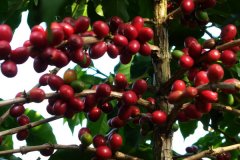
Low-acidity, moderately roasted coffee beans of the World Coffee Center of Central and South America.
Brazil, a low-acidity, moderately roasted coffee bean from the World Coffee Center, is vividly compared to the giant and monarch of the coffee world. There are about 3.97 billion coffee trees there, and small farmers now grow 75% of the country's coffee. The number of coffee producers in Brazil is twice or even three times that of Colombia, the second largest coffee producer in the world.

Introduction to Grinding scale of characteristic species of Coffee beans in Latin America
In Latin America, coffee is produced in South America, where Brazil accounts for 30-50% of the world's production, while Colombia produces 10-20%. At present, the coffee production of Asia and Vietnam has exceeded that of Colombia. In addition, Indonesia has also developed into the world's fourth largest coffee producer Central and South America is the world's largest coffee producing area, where there are numerous boutique coffee. Feel free to take Colombia.

Introduction to the Regional treatment method of Santa Rita Coffee Bean in Colombia
Columbia Santa Rita Coffee Bean Flavor characteristics Manor area treatment method for growing coffee also requires daylight and proper shade, which is most suitable for planting on fertile soil or volcanic ash soil. Therefore, the origin of coffee is widely distributed in South America, Central America, the West Indies, Asia, Africa, Arabia, the South Pacific and Oceania. Such as Ethiopia and Tanzania in Africa

What are the fine coffee beans in Central and South America?
Brazil can be regarded as the world's largest coffee producer and exporter of the coffee continent. As about ten states in the vast territory adopt mass production, in order to make up for the regional gap and quality gap, Brazil sets its own grading benchmark in order to stabilize the quality. The quality of the coffee produced is very good, and it has been regarded as an indispensable coffee bean for mixing since ancient times.

A brief introduction to the cultivation of high-quality boutique coffee beans in Santa Rita Manor, geographical location, climate and altitude
Growing coffee also requires daylight and proper shade, which is most suitable for planting on fertile soil or volcanic ash soil. Therefore, the origin of coffee is widely distributed in South America, Central America, the West Indies, Asia, Africa, Arabia, the South Pacific and Oceania. Such as Ethiopia and Tanzania in Africa, Brazil, Colombia, Jamaica, Guatemala and Mexico in Central and South America.

About Coffee World Map
COFFEE WORLD MAP Most coffee production areas are located between the Tropic of Cancer, that is, 25 degrees north of the equator and 30 degrees south of the equator in the tropics or subtropics. Areas with an annual average temperature of 16-25 degrees Celsius, frost-free and rainfall of 1600-2000 mm. At present, there are more than 70 major coffee producing countries, and the Greater China is located at an altitude of 300-400 meters.

Coffee trees grow around the equator.
Coffee trees grow in tropical or subtropical agricultural gardens centered around the equator and called coffee belts. Most of the coffee production is between the Tropic of Cancer, 25 degrees north of the tropical or subtropical equator and 30 degrees south of the equator. An area with an annual average temperature of 16-25 degrees Celsius, no Frosts Descent and rainfall of 1600-2000 mm. At present, coffee is mainly produced by seven countries.

A brief introduction to the Market Price of Fine Coffee Bean varieties in Los Congo Manor in Central America
Beautiful sour taste, moderate mellow Nicaraguan coffee belongs to the Central and South American style coffee, although the acidity is not very high, but it feels refreshing. The mellow degree is also not high, but the overall feeling is just right, neither thin nor too strong. To make it easier to accept. The taste of red wine can be vaguely felt in the shallow sour taste, which is also a major feature of Nicaraguan coffee.

Panama Coffee Bean Grinding Scale Planting Environmental Treatment Method Manor Introduction
Central America is a long isthmus from northern Mexico to southern Colombia, connecting North America and North and South Africa. Panama is located in the southernmost part of Central America, so the country runs east-west, not north-south as everyone thinks. This means that the Caribbean (Atlantic) coast is in its north, while the Pacific Ocean is in its south. Panama shares the Atlantic Ocean.

Coffee Estate Knowledge Points: Collection and classification of world boutique coffee estates in detail
Coffee comes from coffee beans, which are harvested and processed from the fruits of trees. Coffee trees grow at the equator as the center, between 25 degrees north and south latitude, known as the coffee belt in tropical or subtropical countries home, coffee beans are currently. Coffee comes from coffee beans, which in turn are harvested and processed from the fruits of trees. Coffee trees grow at the equator.
Coffee belt (COFFEE WORLD MAP)
Coffee trees grow in tropical or subtropical agricultural gardens centered around the equator and called coffee belts.

Central American coffee beans have unique environmental advantages. This paper introduces the differences and characteristics of coffee in several regions.
Professional coffee knowledge exchange more coffee bean information please follow the coffee workshop (Wechat official account cafe_style) Central American high-quality coffee beans black gold-"coffee" unique environmental advantages give birth to good coffee in Central America, one of the four major coffee producing areas in the world, with the natural advantages of sunshine, land and mountains, coupled with an adequate working population, make the area a growing area.

Coffee trees grow around the equator.
Coffee trees grow in tropical or subtropical agricultural gardens centered around the equator and called coffee belts. Most of the coffee production is between the Tropic of Cancer, 25 degrees north of the tropical or subtropical equator and 30 degrees south of the equator. An area with an annual average temperature of 16-25 degrees Celsius, no Frosts Descent and rainfall of 1600-2000 mm. At present, coffee is mainly produced by seven countries.
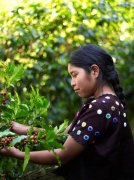
Guava Plain Manor, New Oriental region of Guatemala, Central and South American Coffee
Guatemala is one of the most important coffee producing countries in Central America, with long mountains and different regional climates, thus creating eight major coffee producing areas in Guatemala, all located on the highland topography of the subtropical climate, with abundant and stable rainfall and fertile volcanic ash soil is an excellent environment for coffee trees to grow. Plan del Guayabo is located next to the Volcn de Suchitn volcano.

Panamanian Jadeite Manor Coffee Flavor description treatment method taste variety characteristics manor introduction
Central America is a long isthmus from northern Mexico to southern Colombia, connecting North and South America. Panama is located in the southernmost part of Central America, so the country runs from east to west, not from north to south as people think. This means that the coast of the Caribbean (Atlantic) is in its north, while the Pacific is in the south. So far, Panama also shares the Atlantic Ocean.
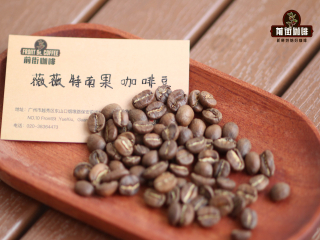
Story of Coffee Variety Taste and Flavor grading system in eight Coffee producing areas of Central and South America
A Wechat post learned about Guatemalan coffee beans Guatemala is a big coffee producer in Central America, ranking eighth in the world in terms of coffee production. Guatemala, whose name comes from the Mayan language, means thelandofmanytrees, the country of the forest. Located in Central America, it is known as the pearl in the crown of China and the United States. Guatemala horse